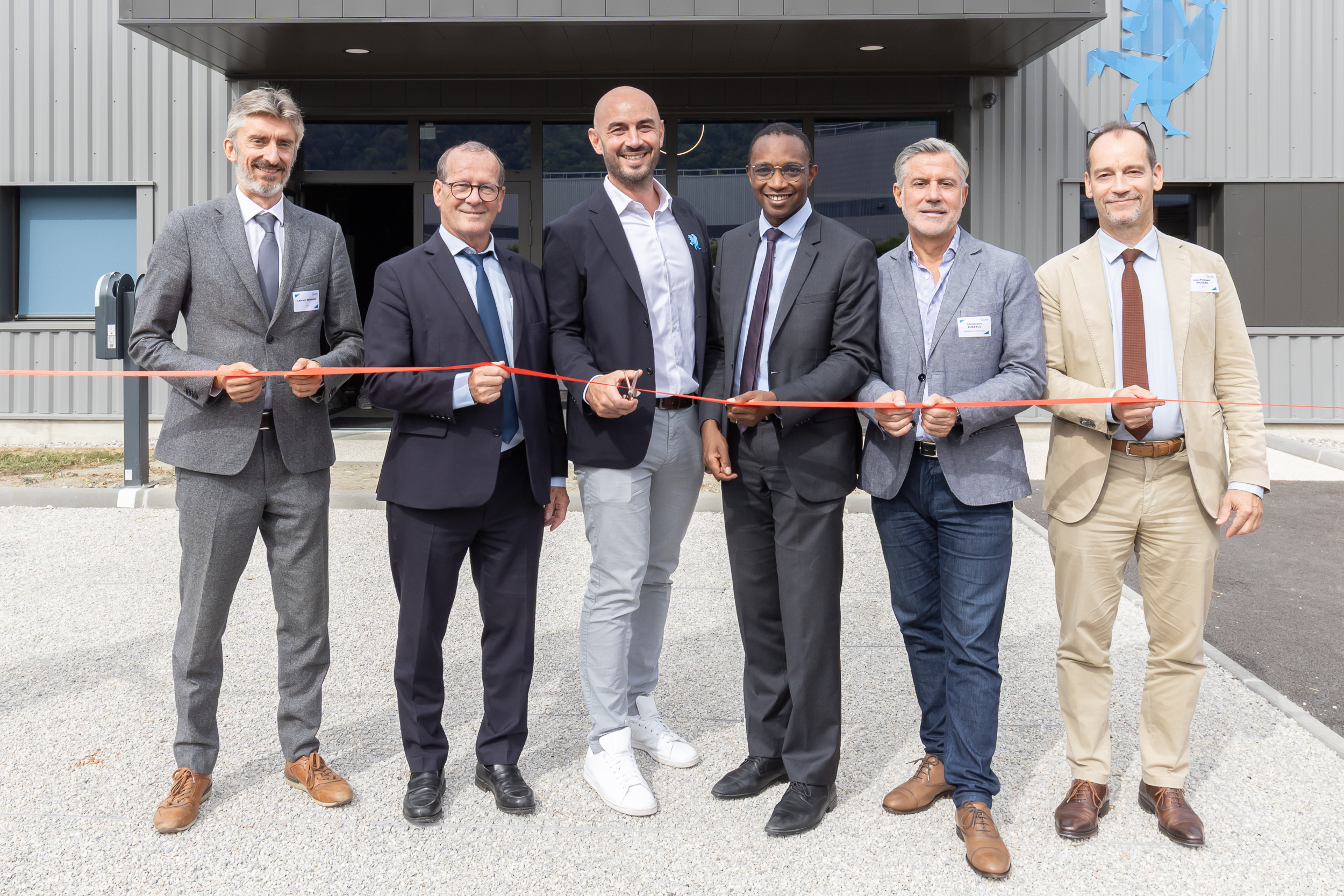

From September 29 to October 2, 2026, the Vulkam team was at Micronora in Besançon, on Booth 305 (Hall B1, Aisle 3) and in the Zoom Area in Hall C.
Many visitors came to discover the demonstrators we set up for the occasion. Each one was designed to showcase the mechanical and aesthetic properties of Vulkalloys®.
How do Vulkalloys® differ from conventional alloys?
Vulkalloys® are amorphous metal alloys. Unlike a conventional metal, whose crystalline structure contains grain boundaries, their atomic arrangement is disordered. The result: no initiation points for fracture or corrosion, and a very large elastic range (1.9% elastic strain for Vulkalloys® Ni and Zr Inox).
These properties are obtained directly after thermoforming, with no heat treatment, thanks to an exclusive process developed and patented by Vulkam, which gives your components the highest performance on the market.
Let’s take a closer look at the demonstrators presented at this 2026 edition of Micronora.
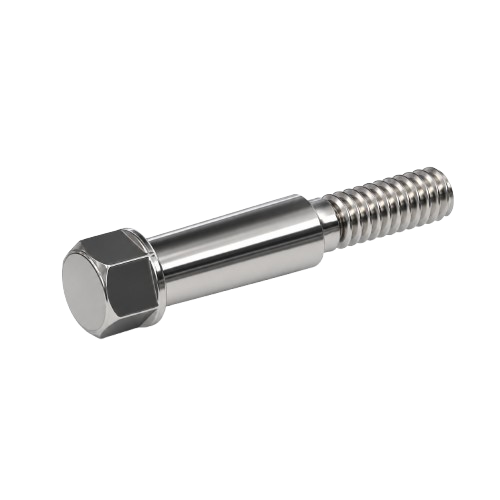
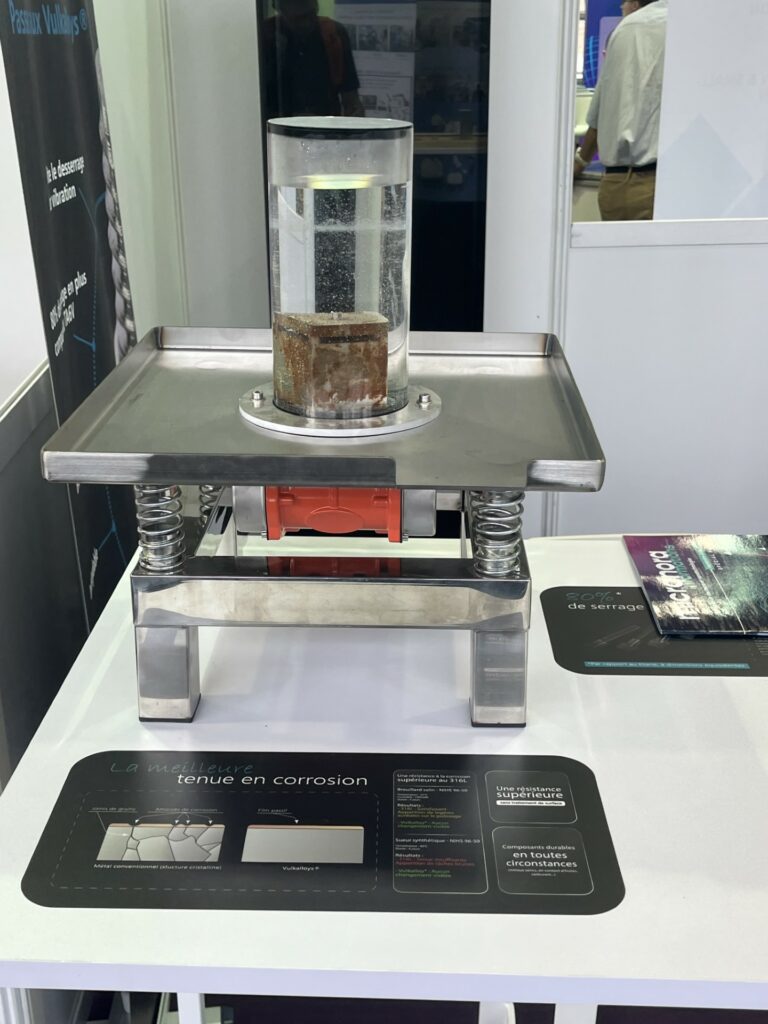
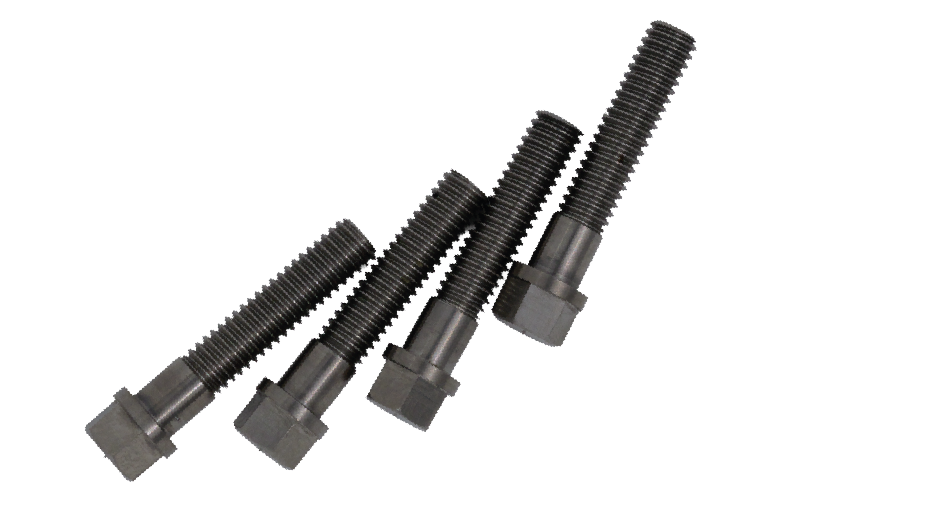
The submerged screw on a vibrating table: it doesn’t corrode, it doesn’t loosen
Why does it resist corrosion?
In a conventional metal, corrosion starts at the grain boundaries. Vulkalloys® have none: their homogeneous structure forms a continuous passive film, with no weak point where corrosion could begin. We verified this in comparison with 316L stainless steel, according to the NIHS 96-50 standard.
This resistance is achieved without any surface treatment, making it ideal for the naval, defense and aerospace sectors, which require durable components for extreme environments.
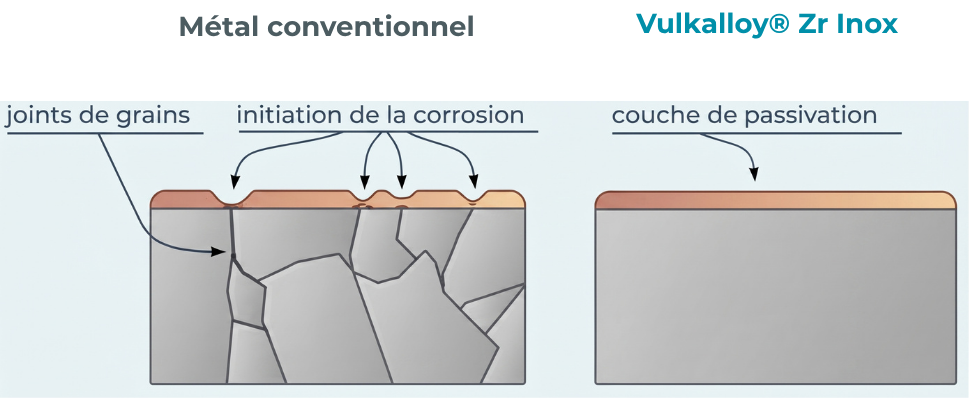
This resistance is achieved without any surface treatment, making it ideal for the naval, defense and aerospace sectors, which require durable components for extreme environments.
Why doesn’t it loosen?
A screw clamps by stretching slightly, like a spring. The more elastic it remains, the better it retains its preload when the assembly vibrates. Vulkalloy® Cu combines low stiffness with a very large elastic range: the screw maintains its clamping tension, keeps the threads in contact and reduces the risk of loosening. This is the “double spring” effect we demonstrated on the booth.
Up to 80% higher clamping force than titanium
With equivalent dimensions, an M4 screw in Vulkalloy® Cu withstands a tension of 4.3 kN, versus 2.4 kN for an M4 screw in Ti-6Al-4V (TA6V), which is 80% more clamping force. There are two ways to read this as a designer:
- At the same size: a significantly higher clamping force;
- At the same clamping force: an M4 Vulkalloy® Cu screw can replace an M5 Ti-6Al-4V screw, meaning a part about 30% smaller. Neighboring parts can then be resized for a more compact and lighter assembly.
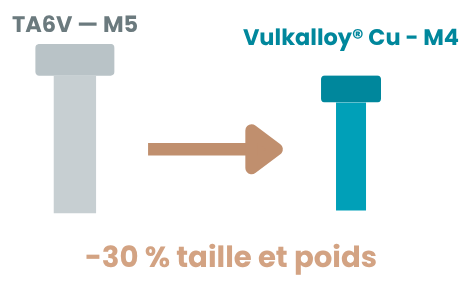
Vulkam can produce screws from M1 to M4 that are stainless, non-magnetic, biocompatible and usable from −250 to 300 °C.
The bent part: deformation that disappears with the load
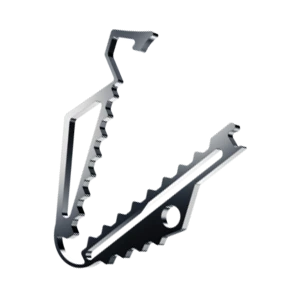
In this demonstrator, a 650 g mass is suspended from the center of a 300 µm-thick Vulkalloy® Ni membrane, which acts as a translation bearing. Under load, the membrane deflects by 5 mm and remains within its elastic range for as long as the load is applied. When the mass is removed, the stress disappears and the membrane returns to its original position. The part shows no residual deformation after bending.
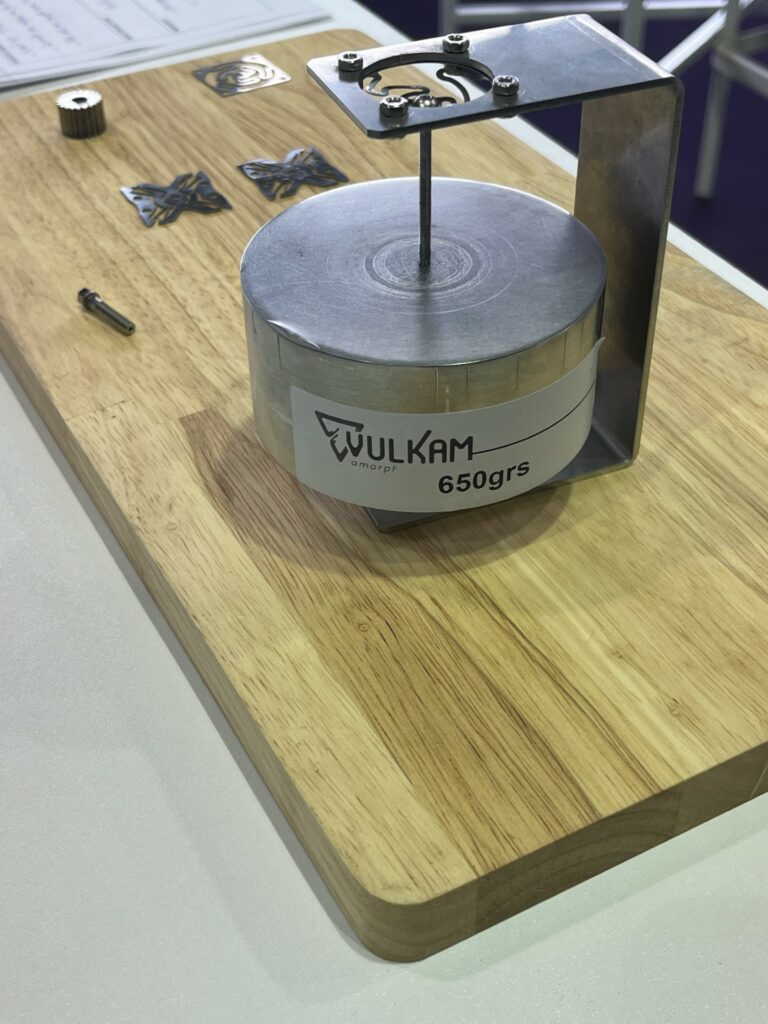
This return to the original geometry makes the material’s elasticity visible: it accepts significant deformation under load while remaining fully reversible. In a conventional metal, stresses concentrate at grain boundaries and defects. In a Vulkalloy®, an amorphous structure without grain boundaries, they are distributed throughout the material. This is why the elastic range reaches 1.9% strain in Vulkalloy® Ni.
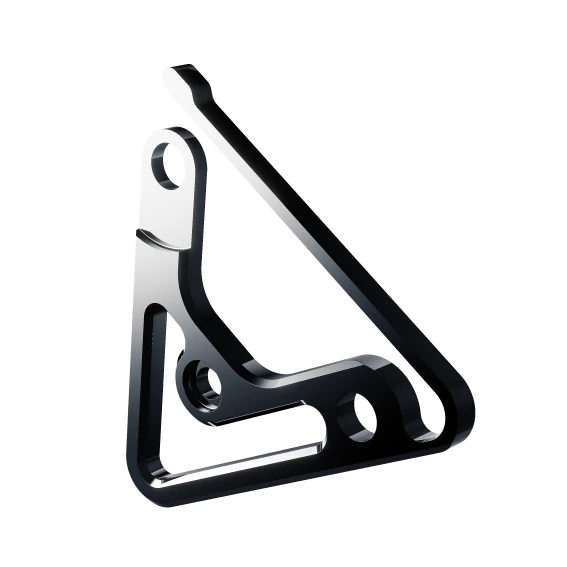
The actuator: a flexible mechanism with no friction and no lubricant
This part can be handled by hand: the movement comes from no joint or hinge, but solely from the elastic deformation of the material. This is the principle of flexure guidance, which replaces a pivot with a component that bends and then returns to its original shape.
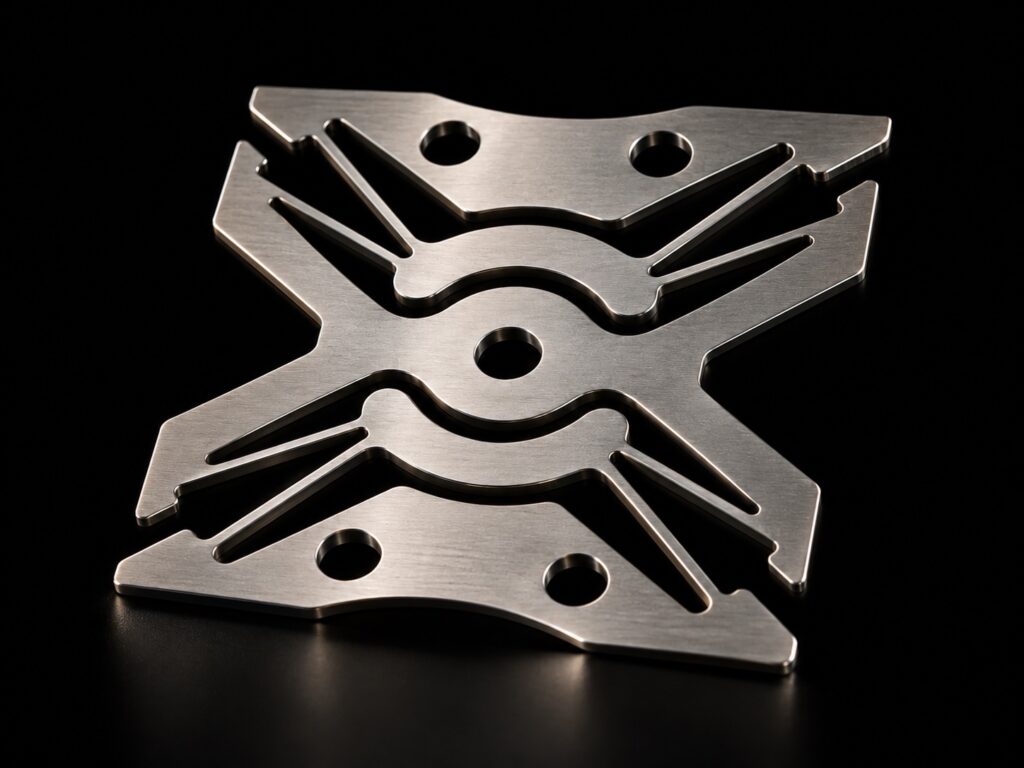
The benefits are directly visible in how it works:
- No friction: no wear and no play developing over time;
- No lubricant to manage: a critical issue in vacuum or cold environments;
- More travel for a given footprint, thanks to the large elastic range of Vulkalloy®.
These mechanisms are of particular interest to the aeronautics and space industries: deployment of solar panels, antennas or reflectors, using hinges and compliant mechanisms that retain their elasticity in cryogenic environments and return to their original shape, cycle after cycle. The same logic applies to springs, flexure pivots, clips and hinges.
Watch cases: hardness, polishing and complex shapes
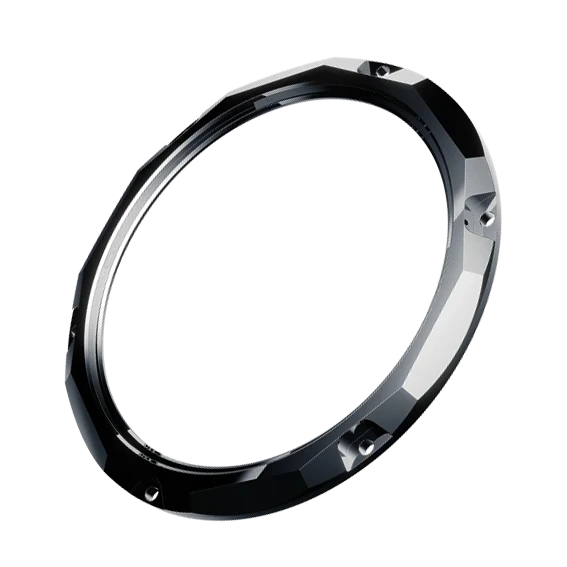
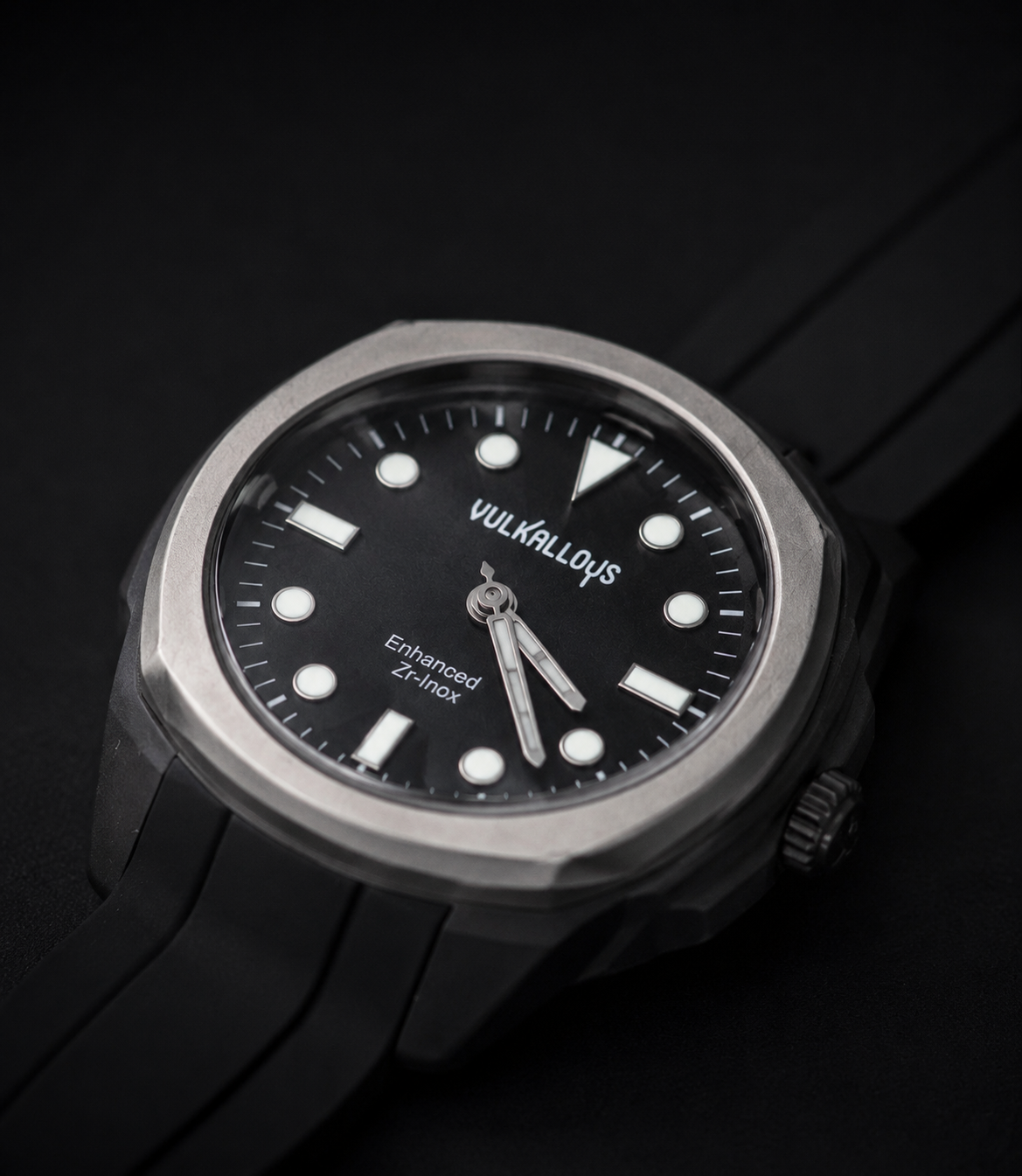
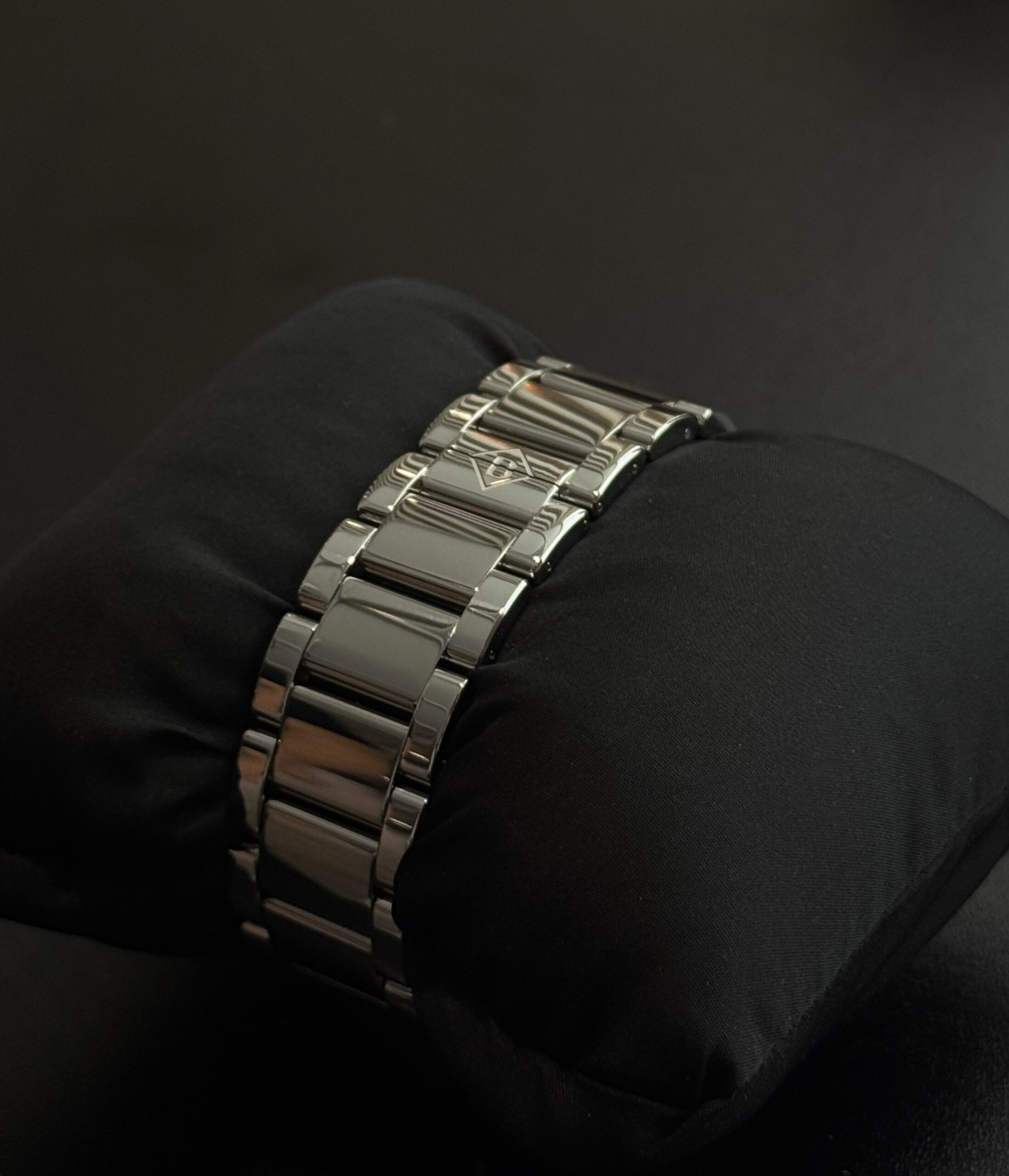
The fourth demonstrator is one to look at up close. Our watch cases show that Vulkalloys® do not only serve mechanical functions: they also serve appearance parts, where the material must look as good as it performs. Vulkalloy® achieves a unique level of brilliance and offers an unprecedented shine.
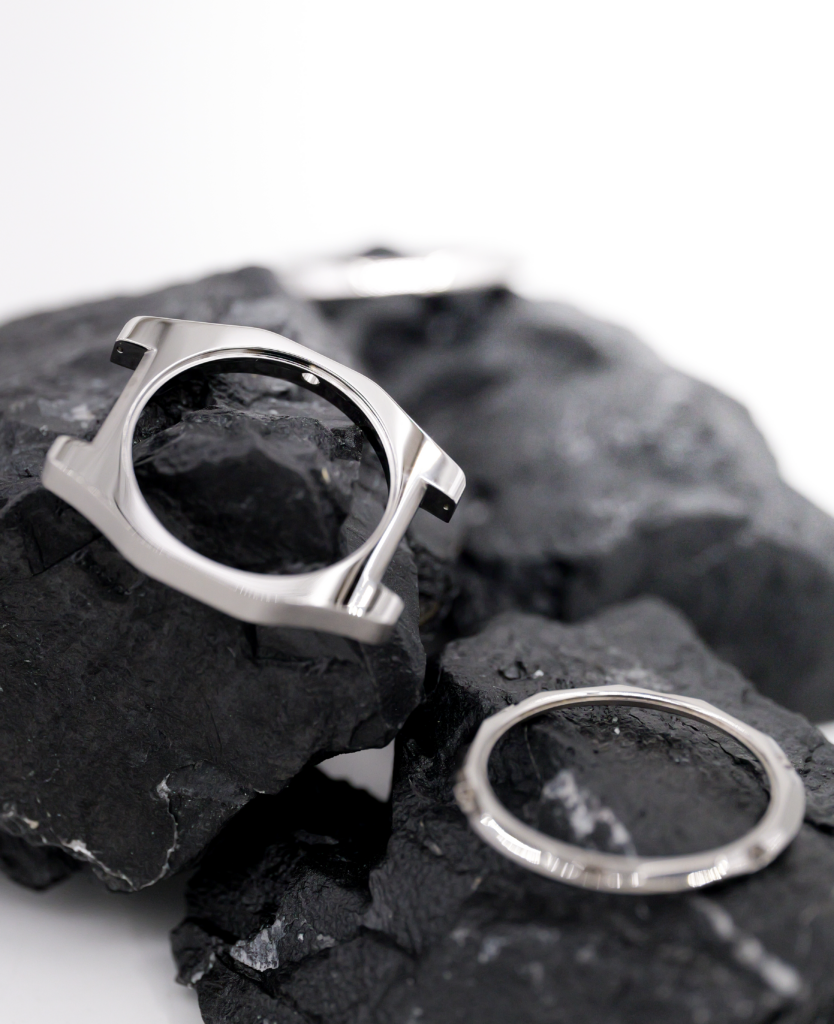
For this type of part (cases, case backs and controls exposed to scratching), our reference alloy is Vulkalloy® Zr Inox, which combines:
- Scratch resistance;
- Excellent polishability;
- Corrosion resistance superior to that of 316L stainless steel;
- A density of 6,150 kg/m³.
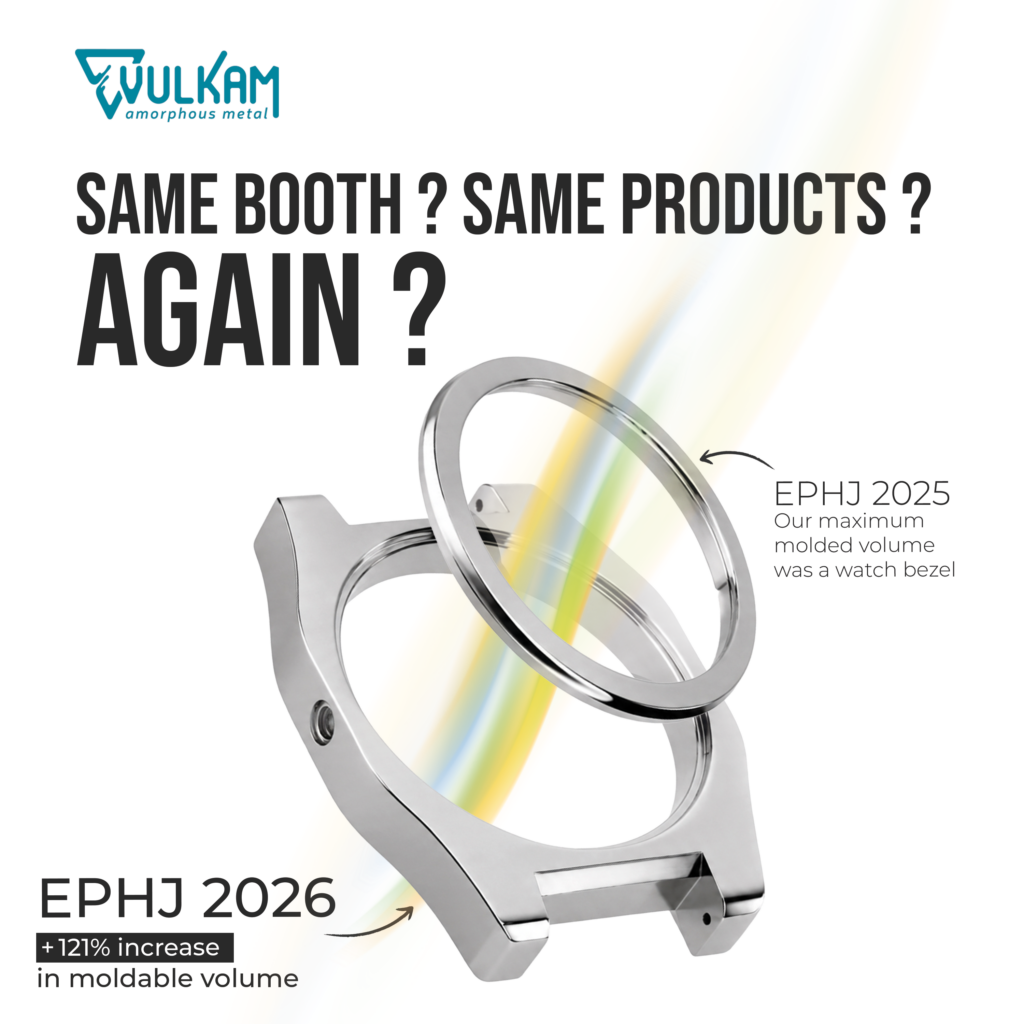
Thermoforming adds a second advantage: it produces in a single operation complex shapes that would otherwise require several machining steps, with a molding accuracy of ±10 µm and an as-molded surface finish below Ra 0.4 µm. Without heat treatment, there is also no quench distortion.
Downloads
- Presentation of the Vulkam talk at the Micronora 2026 Zoom Area: reliability, compactness, service life, and how Vulkalloys® optimize the performance of your systems.
- Vulkalloy® Aerospace & Defense datasheet: Vulkalloy® alloys for aerospace and defense.
Shall we move on to the next step?
Whatever the function of your part (maintaining clamping force, resisting an aggressive environment, deforming without fatigue, keeping a beautiful finish), our teams are ready to listen to your needs and discuss how Vulkalloys® can push the limits of your equipment.
Let’s schedule a meeting to discuss your technical requirements, or simply to learn more about what Vulkalloys® can bring to your systems.
Write to us at
Or by phone: +33 (0)7 57 01 51 18
Our prototypes are delivered in 6 weeks.