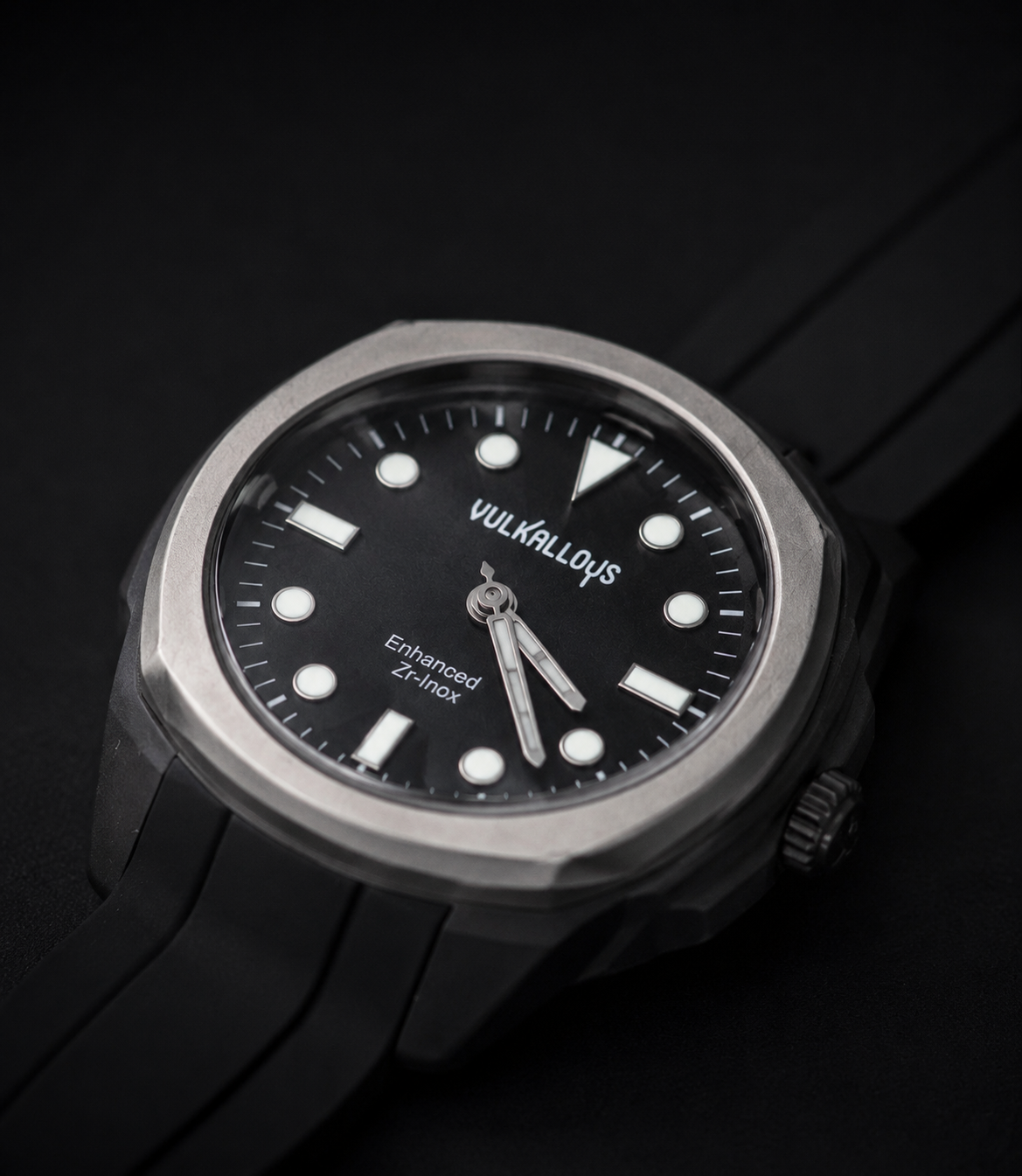
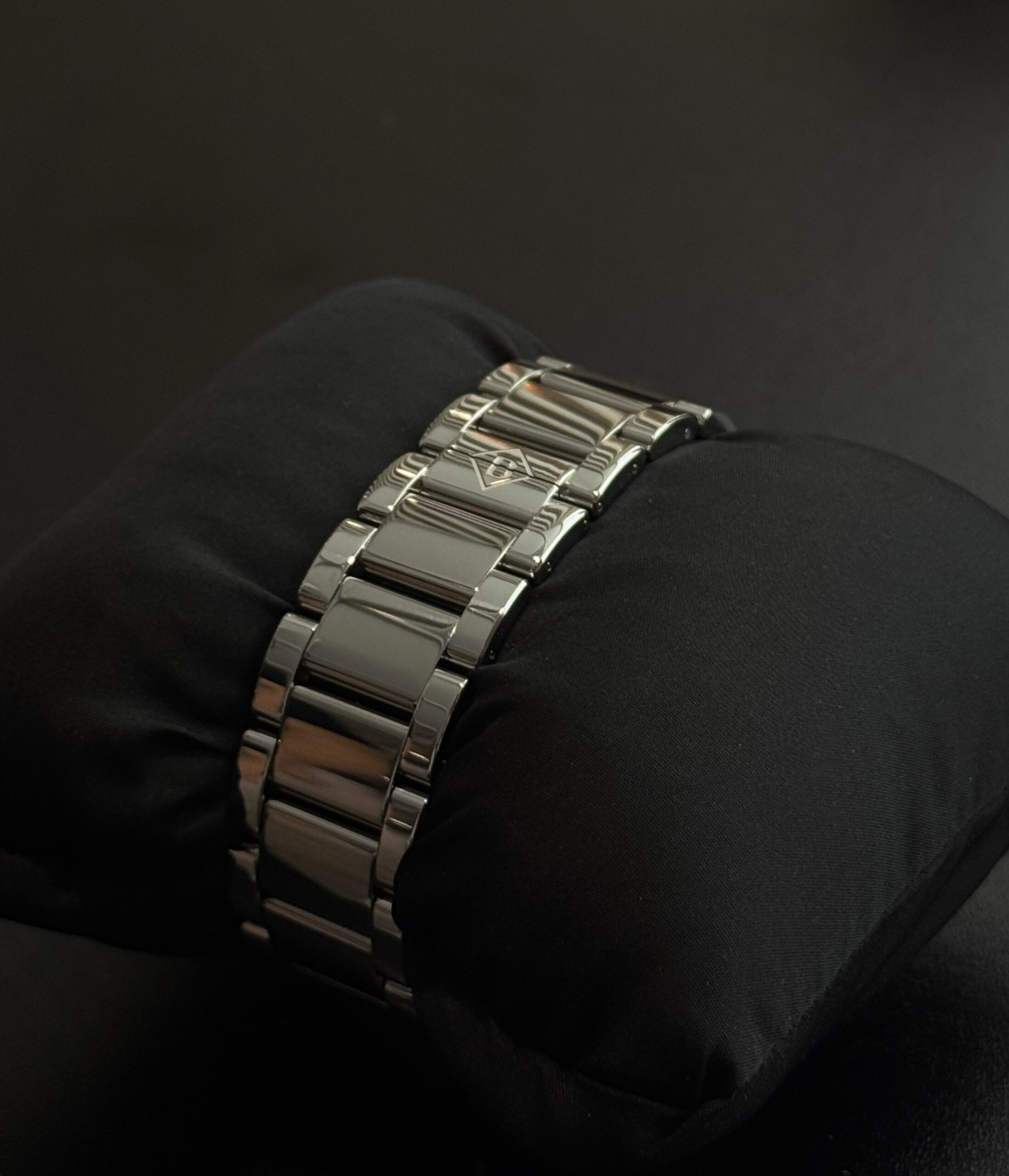
Boucledor, a Swiss manufacturer of watch exterior components, has created a watch bracelet using Vulkalloy® Zr-Inox, which was showcased at the recent EPHJ trade show. Here is a review of this project, the measured properties of the alloy compared to 316L steel, and the practical changes it brings to the workshop.
In search of an alternative to 316L steel
Boucledor works daily with gold and platinum and is constantly seeking new solutions to offer its clients. As part of this initiative, the manufacturer wanted to test an alternative to 316L steel and turned to Vulkalloy® Zr-Inox, an amorphous metal formulation developed by Vulkam specifically for watch exterior components.
The result is a next-generation bracelet where all links are made of Vulkalloy® Zr-Inox. The workload was divided between the two companies: Vulkam manufactured the preforms from which the raw links were derived, and Boucledor then machined, polished (mirror polish and satin finish), and assembled them.
What difference does an amorphous metal make?
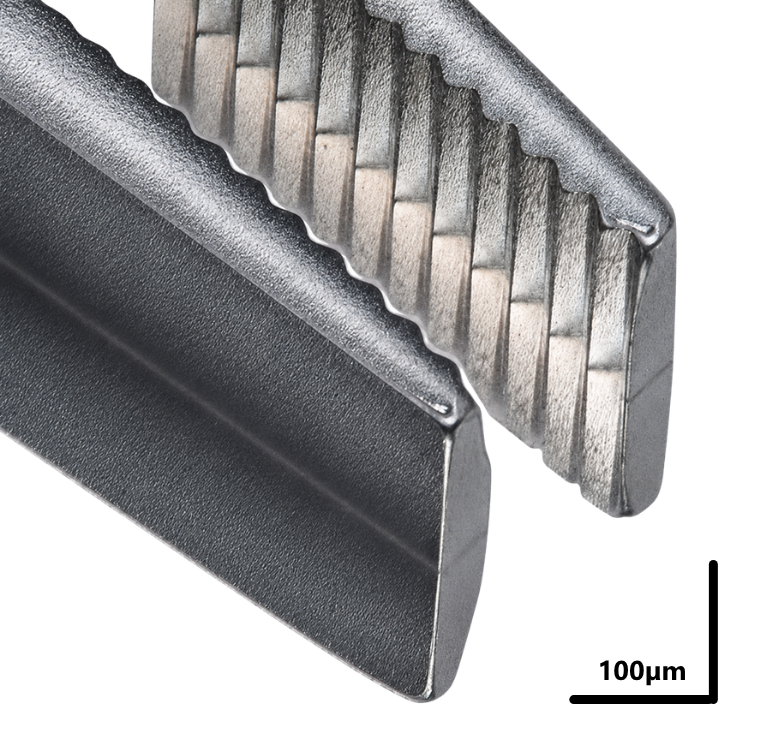
Vulkalloys® Zr-Inox are zirconium-based amorphous alloys. Steel possesses a crystalline structure, organized into grains. An amorphous metal lacks this organization and therefore has no grain boundaries. As Boucledor observed, this structural difference directly dictates the material’s behavior during polishing.
Measured properties vs. 316L steel
| Property | Unit | Vulkalloy® Zr-Inox | 316L Steel |
|---|---|---|---|
| Density | kg/m³ | 6,150 | 8,000 |
| Hardness | HV | 480 | 200 |
| Elastic strain | % | 2 | 0.1 |
| Flexural yield strength | MPa | 1,900 | 240 |
| Young’s modulus | GPa | 95 | 200 |
| Polishability | — | Exceptional | Good |
| Corrosion resistance | — | Excellent | Very good |
| Magnetic susceptibility | — | 1.5 × 10⁻⁷ (non-magnetic) | Non-magnetic |
Lighter
With a density of 6,150 kg/m³ compared to 8,000 kg/m³ for 316L, a Vulkalloy® Zr-Inox part weighs approximately 23% less than a steel part of the identical volume.
Harder
The hardness reaches 480 HV, which is 2.4 times that of 316L (200 HV). Hardness is a primary parameter determining a surface’s scratch resistance — a critical requirement for an everyday-wear timepiece.
In the workshop: Boucledor’s observations
Machining
A single setup piece was sufficient to fine-tune the machining process, achieving a 100% compliance rate for the resulting parts.
Polishing
This is where the absence of grain boundaries truly sets it apart. Polishing very quickly yields a tight, beautifully brightened surface without any rework or “orange peel” effect. No equipment changes are required for polishing: it utilizes the exact same tools and consumables as steel. The material’s higher hardness requires applying greater force, but the material takes the finish flawlessly.
Unprecedented brilliance
The surface captures light in a distinctly novel way. The reflections are more vibrant, and the shine is unique. Boucledor’s teams summarize it as follows:
“The brilliance of the final pieces is striking; they are undeniably shinier, there is no debate. The initial impression was immediately excellent.”
— Cédric Martelly and Alex Boisier, Methods Project Managers at Boucledor
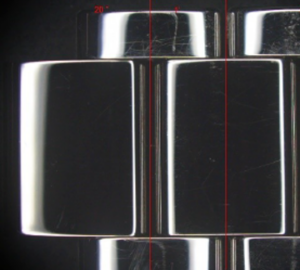
Scratches: Vulkalloy® links vs. steel links side by side
In the close-up view below, the center links are made of Vulkalloy® Zr-Inox, while the surrounding links are steel. The steel links show visible scratches; the Vulkalloy® Zr-Inox links show none. This observation consistently aligns with the hardness gap between the two materials (480 HV vs. 200 HV).
Corrosion, nickel, magnetism: data for a timepiece built to last
Corrosion resistance
Electrochemical tests were conducted on mirror-polished samples. Vulkalloy® Zr-Inox demonstrates a higher pitting potential than 316L, reflecting superior resistance to pitting corrosion under these testing conditions.
Nickel release
In watchmaking, nickel release is evaluated according to the European standard NF EN 1811+A1 (2015). Tests were conducted in synthetic sweat for one week on three P180-polished samples, with an ICP analysis of the released elements. The nickel release from Vulkalloy® Zr-Inox is below the detection limit. The test is fully compliant.
Magnetism
Vulkalloy® Zr-Inox is non-magnetic.
Design constraints to integrate
- Maximum thickness: 5 mm
- Maximum volume: 4,500 mm³
Step up to superior brilliance for your next collection
Looking for a high-performance alternative to 316L steel for your future exterior components? Discuss your technical and aesthetic requirements with our expert.
Or by phone: +33 (0)7 57 01 51 18